Barking and pulling toward other dogs when they get too close
FrequentlyIntensity 4/5
Hudson Paw Dog Training
Hudson Paw Dog Training
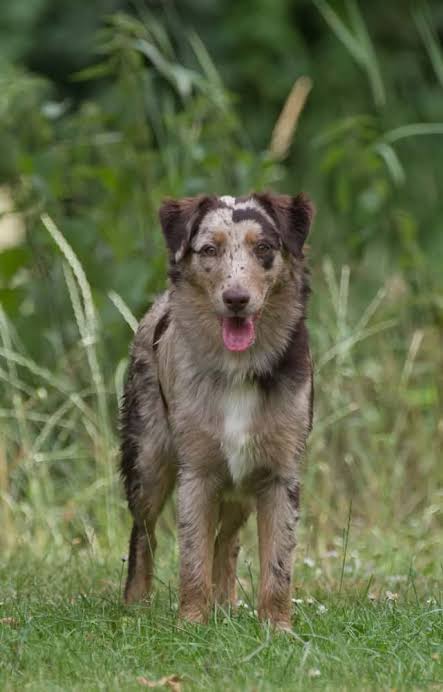
Behavioral assessment for Capri
Jessica Parker · Australian Shepherd
Behavioral assessment completed on September 29, 2026
Below you will find the observations, goals, and recommendations established during the assessment.
At a glance
Primary concern
Capri has become increasingly reactive toward other dogs on walks. She pulls toward them, barks when they get too close, and has difficulty refocusing on Jessica once she is over threshold. The behavior is more noticeable in busy environments and on narrow sidewalks where creating distance is difficult. At home, Capri is generally calm and responsive.
Priority
High
Main goal
Improve engagement around other dogs
Help Capri maintain or regain focus on Jessica when other dogs are present, starting at a distance where she can remain calm and responsive.
Context and triggers
Identified triggers
Dogs approaching within close distance during walks
Capri becomes tense, pulls toward the other dog and may bark when the distance becomes too short. She responds better when enough distance is maintained.
Narrow sidewalks or areas where moving away is difficult
Reactivity increases when Capri cannot create distance. She has more difficulty disengaging and refocusing on Jessica.
Dogs appearing unexpectedly around corners or from entrances
Capri reacts more quickly when she has little time to process the other dog's presence. Recovery takes longer than during predictable encounters.
Observed challenges
Struggles to redirect attention back to Jessica after reacting to another dog
FrequentlyIntensity 4/5Becomes highly alert and less responsive in busy environments or after unexpected encounters
SometimesIntensity 3/5Observations
Capri's reactivity appears strongly influenced by distance and predictability. She remains more responsive when other dogs are noticed early and enough space is available, but has difficulty disengaging once she becomes over-aroused. Her ability to recover at greater distances suggests that working below threshold and gradually building engagement around distractions should be a useful starting point.
Trainer analysis
Observations
Capri shows increased leash reactivity when other dogs enter her comfort zone, particularly in restricted spaces or during unexpected encounters. Her ability to remain engaged at greater distances suggests that distance and predictability play an important role in her responses. Once over-aroused, she has more difficulty disengaging and refocusing on Jessica.
Analysis
Capri's reactions may be influenced by a combination of over-arousal, limited coping strategies at close distances, and difficulty processing unexpected encounters. Her improved responsiveness when given more space suggests that working below threshold may help her develop calmer and more consistent responses around other dogs.
Strengths
Capri is responsive and engaged in lower-distraction environments. She is able to refocus when sufficient distance is provided and shows a good connection with Jessica. These existing skills provide a strong foundation for building engagement and gradually working around more challenging distractions.
Points to monitor
Monitor Capri's threshold distance around other dogs, her ability to disengage before reacting, and the time needed to recover after an encounter. Also observe whether her reactions vary depending on the environment, the other dog's behavior, the available space, or the predictability of the encounter.
Training goals
Improve engagement around other dogs
To work onPriority HighHelp Capri maintain or regain focus on Jessica when other dogs are present, starting at a distance where she can remain calm and responsive.
Reduce leash reactivity
To work onPriority HighGradually reduce barking, pulling and tension around other dogs by working below threshold and reinforcing calmer responses.
Improve recovery after triggers
To work onPriority MediumHelp Capri recover more quickly after challenging encounters and return to a calmer, more responsive state.
Recommendations and next steps
Immediate recommendations
The initial focus will be on helping Capri stay below threshold around other dogs, strengthen her engagement with Jessica, and develop calmer responses during walks. Training should begin in predictable environments where enough distance can be maintained, then progress gradually as Capri becomes more comfortable and responsive. Avoid forcing close encounters with other dogs for now. Create distance whenever Capri begins to show signs of tension, and reward calm observation and voluntary check-ins with Jessica. Choose quieter walking areas when possible to create successful training opportunities.
Exercises and recommended actions
Practice short engagement exercises and loose-leash walking in low-distraction environments. Reward Capri for voluntarily checking in with Jessica. When another dog appears, maintain enough distance for Capri to stay responsive, then reinforce calm behavior before gradually working closer over time.
Recommended frequency
Short practice sessions of 5–10 minutes, ideally once or twice a day during regular walks.
Next step
Schedule a first training session to work on engagement, distance management and recognizing Capri's threshold around other dogs in a controlled environment.
Additional comments
Progress should be gradual and adjusted to Capri's responses. The goal is not to eliminate reactions immediately, but to create repeated successful experiences where she can notice another dog while remaining able to engage with Jessica.
Need help or have a question?
Contact Hudson Paw Dog Training anytime.
Organization contact details
Phone: Not provided
Email: Not provided
Document generated by PawTracker for Hudson Paw Dog Training.
 Document generated with PawTracker.